Process EngineeringGP

Process engineers: design, model and operate up-to-date processes and plants!
ENSIACET Process Engineers have strong theoretical and practical knowledge in Process Engineering as well as general skills in social sciences, humanities and economics.
They are proficient in numerical and IT skills. Used to team work , they are able to innovate on interdisciplinary projects, invent new processes, design and model future plants, manage their achievement and their operation to make them more profitable, more sustainable, cleaner and safer.
Objectives
The Toulouse INP-ENSIACET Process Engineering major combines three core disciplines: Physics, Chemistry and Applied Mathematics/Computing.
This curriculum aims at a systemic approach for Process Engineering disciplines. Thus it promotes modeling and the use of numerical tools to design and manage industrial plants.
ENSIACET Process Engineers are therefore interdisciplinary physicians who have strong skills in the core disciplines of process engineering (heat and mass balance, transport and transfer phenomena, unit operations…) and high proficiency in statistics, digital. They are also skilled at social sciences, humanities and economics.
Features
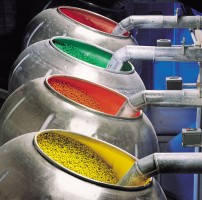
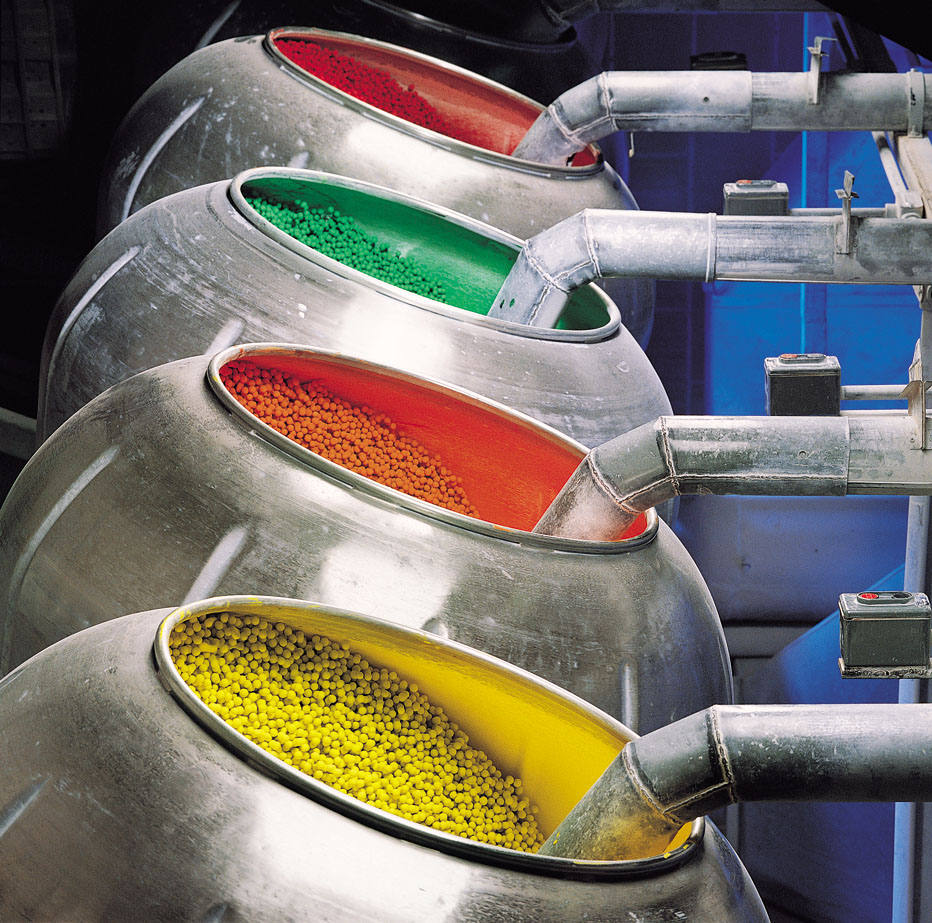
Procédés discontinus pour le traitement des solides © Getty imagesDiversity of courses (drying and distillation, modelling…).- Motivated and involved teaching, administrative and technical staff.
- Numerous professional activities:
- Production,
- R&D (Research, Development),
- Design services and consulting.
- Stimulating career in various fields:
- from the petrochemical industry to the food-processing industry,
- from pharmacy to energy.
Skills
- Create and design up-to-date systems for mass and energy transformation.
- Analyze, control and optimize processes.
- Master the tools for modeling and simulation of processes multi-scales (mixing zone, equipment, interconnected unit...).
- Take into account the quality, risk management, safety, sustanable development and optimal energy management.
- Fit into and work in interdisciplinary teams.
- Manage scientific and technical projects.
Course subjects
Percentage of subjects
|
16% |
Math, Physics, Chemistry Applied mathematics, Mathematical models, Data processing, Thermodynamics, Kinetics, Physical chemistry |
|---|---|
|
11% |
Engineering sciences Fluid mechanics and mass transfer, LCA and eco-design, Industrial chemistry, Chemical engineering for sustainable industry, Experimental methodology, Databases |
|
35% |
Engineering professions Process design and sizing, Technology, Production management, Safety, Economic evaluation, English, Management, Communication |
|
17% |
Numerical simulation Numerical calculation, Programming, Process simulation, Control, Optimisation, Modelling and Simulation |
|
12% |
Energy |
|
9% |
Humanities |