
Industrial EngineeringGI
Industrial Engineers: engineers with a global vision of the company!
Industrial Engineers from Toulouse INP-ENSIACET combine the skills of a high-level multidisciplinary engineer with those of a company’s technical functions’ manager. Armed with a solid scientific and technical background, he can successfully coordinate the interfaces between the control of industrial processes and the management of complex and integrated industrial systems. He is prepared and committed to the factory of the future.
Objectives

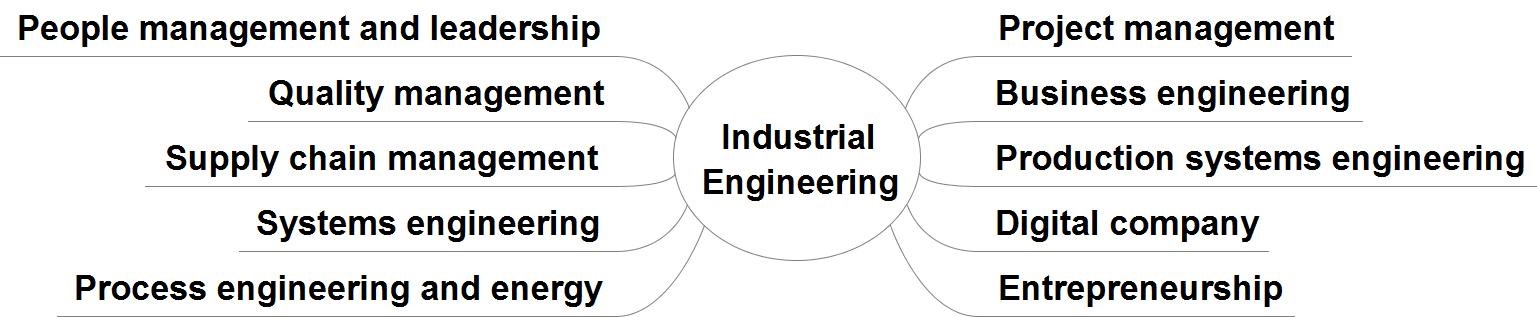
The Toulouse INP-ENSIACET "industrial engineering" major aims to train competent engineers in all the key aspects of industrial organization, giving them the knowledge and skills sought and adapted to all sectors of activity, from traditional manufacturing industries to digital and service companies. Industrial Engineers from Toulouse INP-ENSIACET can perform in any industrial sector, and deal with the physical system of the company (engineering, industrialization, production), with more transversal functions (quality, information systems, logistics) as well as the global industrial process (project management, support for innovation, business creation). A trademark of Toulouse INP-ENSIACET’s industrial engineering curriculum is to mix the industrial engineering discipline with chemical engineering processes and technologies.
Features
 An integrating vision of the function of the engineer in the chain of design / development / exploitation of industrial products.
- The ability to perform inside a complex and integrated industrial process.
- The ability to collaborate efficiently with all the actors of an industrial process.
- The ability to set industrial targets (performance indicators, planning, budget), quantify and monitor industrial performance.
- The technological skills specific to industrial processes for the transformation of matter and energy.

Skills
- Design, control and management of industrial projects (technology, economic and human resources).
- Management and optimization of industrial operations and the associated supply chain, internal or external to the company.
- Quality management and quantification.
- Design, deployment and maintenance of the companies’ information systems.
- Analysis and operation of equipment and process units.
Course subjects
Percentage of subjects
|
35% |
Industrial Engineering |
|---|---|
|
|
Project Management, Production Management, Information Systems, Logistics, Quality, Lean, Digital Factory |
|
20% |
Math and computer science |
|
Applied Mathematics, Artificial Intelligence, Programming, Numerical Computing, Optimisation, Modelling and Simulation | |
|
20% |
Engineering sciences |
|
Separation and reaction processes, Balance, Process synthesis, System dynamics and control | |
|
10% |
Engineering professions |
|
Business management, Economics, Commercial function, Communication, Health and Safety, Environment | |
|
10% |
Physics |
|
Thermodynamics, Fluid mechanics, Transfer phenomena (thermal and heat diffusions) | |
|
5% |
Humanities |
|
English, Physical Education, Conferences |